Mentoring
Two-way learning. Developmental relationships. Genuine partnerships.

To promote a mutual partnership, AHRD is opting for a relational mentoring model where participating faculty/advanced doctoral student/post-doctoral scholar will be mentoring partners to each other (Ghosh, Hutchins, Rose, & Manongsong, 2020; Ragins & Verbos, 2007; Ragins, 2011). In other words, both parties in the mentoring relationship can be mentors and/or mentees depending on their developmental needs. Rotating the mentor/mentee roles between each other will enable them to reciprocate each other's learning.
For example, a junior HRD faculty can be a mentee when he/she is learning from a senior or a mid-career HRD faculty (enacting a mentor's role) about how to publish in HRD journals. The same junior HRD faculty can mentor the mid-career/senior HRD faculty on a new topical area that is gaining traction in HRD research in recent years (e.g., engagement, incivility etc.).
This model emphasizes two-way learning characterizing high-quality developmental relationships and challenges the traditional notion that views mentoring as a top-down hierarchical relationship where one who is relatively senior in the relationship typically assumes the mentor's role (Ghosh, Reio, & Haynes, 2012).
 Each faculty participant will complete a "Mentoring Partner choice Form" where they will need to justify their choice by explaining why their chosen mentoring partners are best suited/prepared to meet their developmental needs and how they are best suited to meet their chosen partners' developmental needs. Developmental needs of all participating faculty will be made available to inform these choices.
 The participating faculty need to remember that the mentoring partnership they will develop in this program will be ONE developmental relationship among many they can establish for their professional and personal growth.

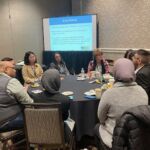
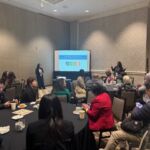
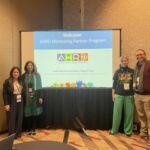

Benefits of Mentoring Program
Mentoring News
Announcing the Excellence in AHRD Mentoring Partnership Award
The Academy of Human Resource Development (AHRD), in formal partnership with the International Mentoring Association (IMA), is pleased to introduce the Excellence in AHRD Mentoring Partnership Award, a new award established to recognize and celebrate exemplary mentoring partnerships within the AHRD Mentoring Partner Program. AHRD and IMA will co-sponsor and administer this award in alignment with shared commitments to advancing high-quality, impactful mentoring practices.
This award reflects AHRD's dedication to excellence in scholarship, practice, and professional service, while elevating the transformative role of developmental relationships in strengthening individuals and the broader field of Human Resource Development. By honoring outstanding mentoring partnerships, AHRD and IMA seek to highlight reciprocal learning, mutual support, and sustained collaboration as essential elements of effective mentoring.
Academy of Human Resource Development (AHRD) Mentoring Partners Program (MPP)
We are excited to continue the AHRD Mentoring Partners Program we launched in 2016 to address the career/professional development needs of HRD faculty/post-doc/doctoral students across different career levels (i.e., junior, mid-career, senior). 75 + pairs (around 160 AHRD members) have participated in the Program. This program is a great chance to expand your HRD professional network, learn new skills, and help meet your professional goals.
Applications for the 2026-27 cohort
Here are the steps for the 2026-2027 cohort:
- Complete the "Participant Input Form" by April 20, 2026.
- The Program team will share the Profiles received with all who submits the Participant Input Form and schedule a Zoom Speed Dating by mid-May.
- Following the Zoom Speed Dating Session, the Program team will request all participants to complete the "Partner Choice Form" by May 31 where they can list up to 3 choices of mentoring partners from the pool of participants.
- The Program team will then use the information in the Partner Choice Forms to assign Mentoring Partner pairs (Dyad or Group) by June 15.
- The Program Team will schedule a Mentoring Partnership kick-off Webinar by June 30, 2026 where the AHRD Mentoring Agreement form and other process steps will be explained.
Note: We have expanded the Mentoring Program scope to include advanced level doctoral students in addition to faculty members of the AHRD.
Deadline: May 31, 2026 - All participants will need to complete the Mentoring Partner Choice Form (closed).